
Our Services
Access to the COMPASS community responder team is through 911 dispatch or through mobile outreach by the team. We respond to 911 dispatch when requested by police or fire paramedics to assist with someone with a mental health or substance use challenge. We also respond independently when the 911 call taker has determined that there is no public safety risk or medicale mergency. When accessed through outreach, the COMPASS community responder team engages individuals directly in New Haven. COMPASS also has partnerships with over two dozen community partner agencies that can call the COMPASS community responder team directly. When the team arrives on scene, they call into the 911 call center to let them know they are on scene. These types of targeted outreach responses are intended to prevent 911 calls. There is no cost for COMPASS services.

A Trauma-Informed Approach
We use a trauma-informed approach in all of our work that follows guidance from the federal Substance Abuse and Mental Health Services Administration (SAMHSA, 2014). In a trauma-informed informed approach:
- We realize that trauma can have a significant impact on someone but recovery is possible
- We recognize specific signs and symptoms a person may have after experiencing trauma
- We respond in a way that takes the trauma into account
- We attempt to prevent re-traumatization
The Power of Peers
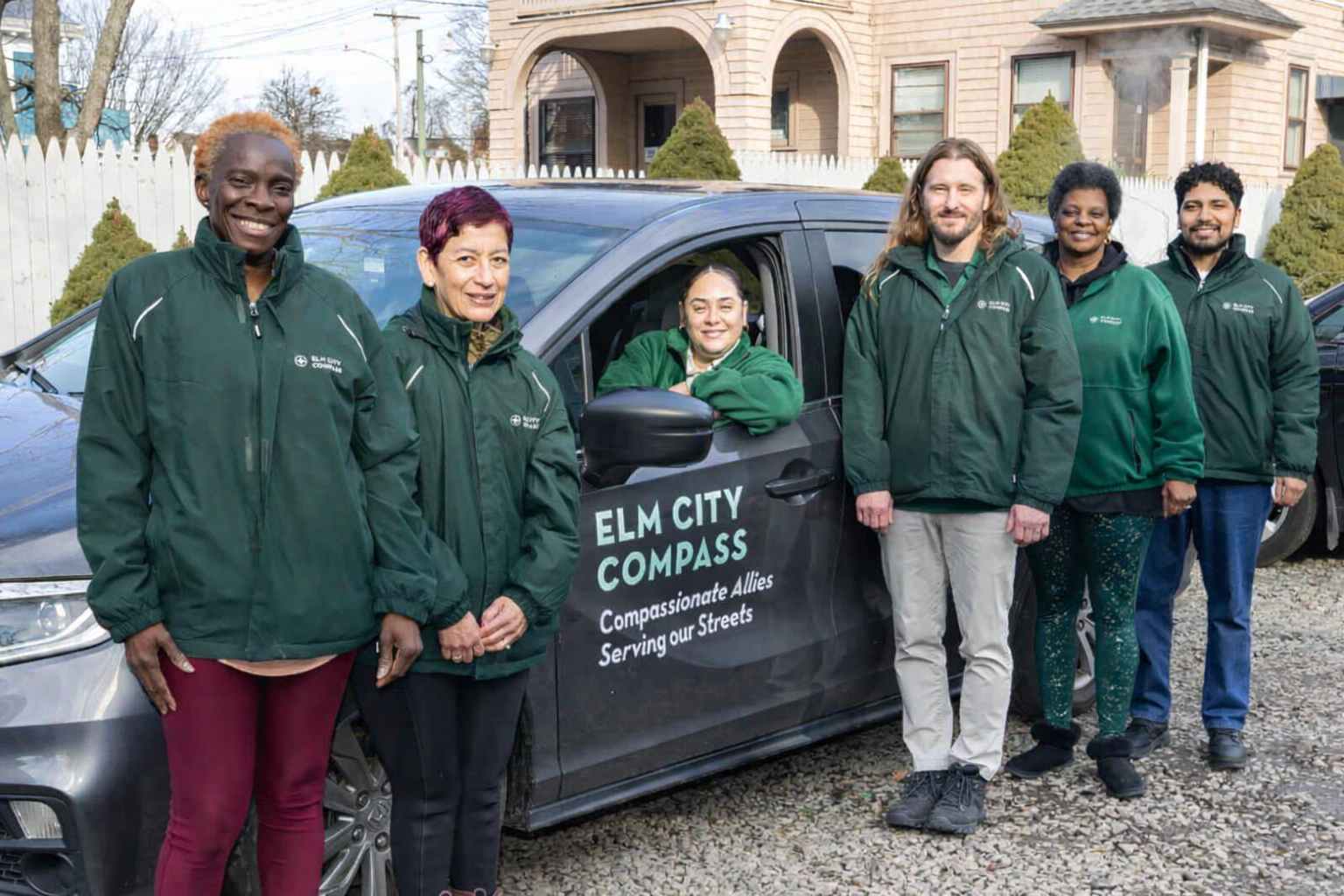
Our community responder team includes a peer with lived experience of mental illness and/or addiction who is in recovery. A peer can be especially helpful in making a positive connection with someone during a mental health or substance use crisis.

Types of COMPASS Crisis Responses
Individuals in need of assistance due to a mental health or substance use crisis
- Person feels depressed or someone’s friend is depressed and wants to talk to someone.
- Person is talking to themselves but doesn’t otherwise require a police response.
- Person who may be suicidal or at risk of suicide.
- Person who appears to be intoxicated but not otherwise causing a disturbance.
- Family or friends of the deceased is upset/in shock and asks to/may need to talk to someone.

Individuals in need of resources or supports due to housing or other service needs
- Helping someone be added to the Coordinated Access Network (CAN) eligibility list to secure housing.
- Someone is sleeping on the sidewalk and does not appear to have medical needs.
- Someone is residing in an encampment and needs to be connected to housing and other services/resources.
- Coordination with the Mobile Crisis Intervention Service (MCIS) to provide emergency assistance to a child/youth who is in crisis and is on scene.
What COMPASS Can & Cannot Do
What we can do
- Respond to crises based on requests from police & fire and through self-initiated outreach.
- Refer people in crisis to services, with priority given to diverting individuals from emergency department admissions or incarceration.
- Consult to police & fire on scene about mental health/addiction needs & services.
- Transport a person in the COMPASS van to services so long as there is no medical emergency requiring care or the person is not being taken into custody.
What we cannot do
- Admit someone in crisis to the hospital without their consent.
- Provide services outside of New Haven.
- Split the two-person team to respond to multiple crisis calls at the same time.
